I remember the first time that I saw the Easter parades in Spain whilst on Camino I did not know much about them so here is everything I have been able to find out (I know that I post this every year but the link to the dates and times of the parades in Santiago are included).
In Spain the Easter processions are organized by 'Co-fradias' or 'The Brotherhoods' and the floats that they carry are called 'tronos'. The people who carry them are called 'Costaleros' (a 'costal' being the small cushion often used to stop the tronos causing sores when being carried - the tronos can weigh up to 6 tons!).
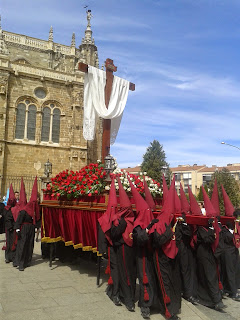
The people who follow the tronos who wear the cone-shaped hats (these are worn in the belief that it will bring them closer to the heavens) are called 'Nazarenos'.
For anyone lucky enough to be in Santiago over Easter here's a link to a site with information on what's going on during Holy Week
http://www.semanasantasantiago.com/
or http://www.worldtravelguide.net/santiago-de-compostela/events
Information on the processions is on http://www.semanasantasantiago.com/processions
The Confraternity of Saint James has a page listing a few processions at http://www.csj.org.uk/question/what-about-going-in-holy-week/
Easter Parades in Burgos:
http://semanasantaburgos.com/
In Leon:
http://www.spain.info/en/que-quieres/agenda/fiestas/leon/semana_santa_de_leon.html
In Astorga:
http://www.studyinspain.info/en/eventos/detalle/Semana-Santa-de-Astorga
If anyone knows any details about any other parades on the Camino over Easter this year then please add them in the comments below.
In Spain the Easter processions are organized by 'Co-fradias' or 'The Brotherhoods' and the floats that they carry are called 'tronos'. The people who carry them are called 'Costaleros' (a 'costal' being the small cushion often used to stop the tronos causing sores when being carried - the tronos can weigh up to 6 tons!).

A parade in Astorga in 2015
The people who follow the tronos who wear the cone-shaped hats (these are worn in the belief that it will bring them closer to the heavens) are called 'Nazarenos'.
For anyone lucky enough to be in Santiago over Easter here's a link to a site with information on what's going on during Holy Week
http://www.semanasantasantiago.com/
or http://www.worldtravelguide.net/santiago-de-compostela/events
Information on the processions is on http://www.semanasantasantiago.com/processions
The Confraternity of Saint James has a page listing a few processions at http://www.csj.org.uk/question/what-about-going-in-holy-week/
Easter Parades in Burgos:
http://semanasantaburgos.com/
In Leon:
http://www.spain.info/en/que-quieres/agenda/fiestas/leon/semana_santa_de_leon.html
In Astorga:
http://www.studyinspain.info/en/eventos/detalle/Semana-Santa-de-Astorga
If anyone knows any details about any other parades on the Camino over Easter this year then please add them in the comments below.
Comments
Post a Comment